
English| EUR
Suggested for you
More currencies
Choose a language
Honolua Bay sits inside a Marine Life Conservation District on Maui's northwest coast, where the right conditions deliver calm, clear water and abundant reef fish in depths children can manage. The challenge is timing: afternoon trade winds chop the surface, parking fills fast, and winter swells close the bay entirely. Families who understand the rhythm leave with sightings most aquariums cannot match.
Quick answer
Honolua Bay snorkeling with kids works best during summer months (May through September) in the early morning window between 7:00 and 9:00 AM, when trade winds are minimal and the bay's protected cove offers calm, gin-clear conditions over shallow reef ledges. The bay is free to access year-round, but winter swells (November through March) create dangerous shore breaks and strong currents unsuitable for children. Families should arrive early to secure roadside parking along Honoapiilani Highway and plan for a short but steep trail descent.
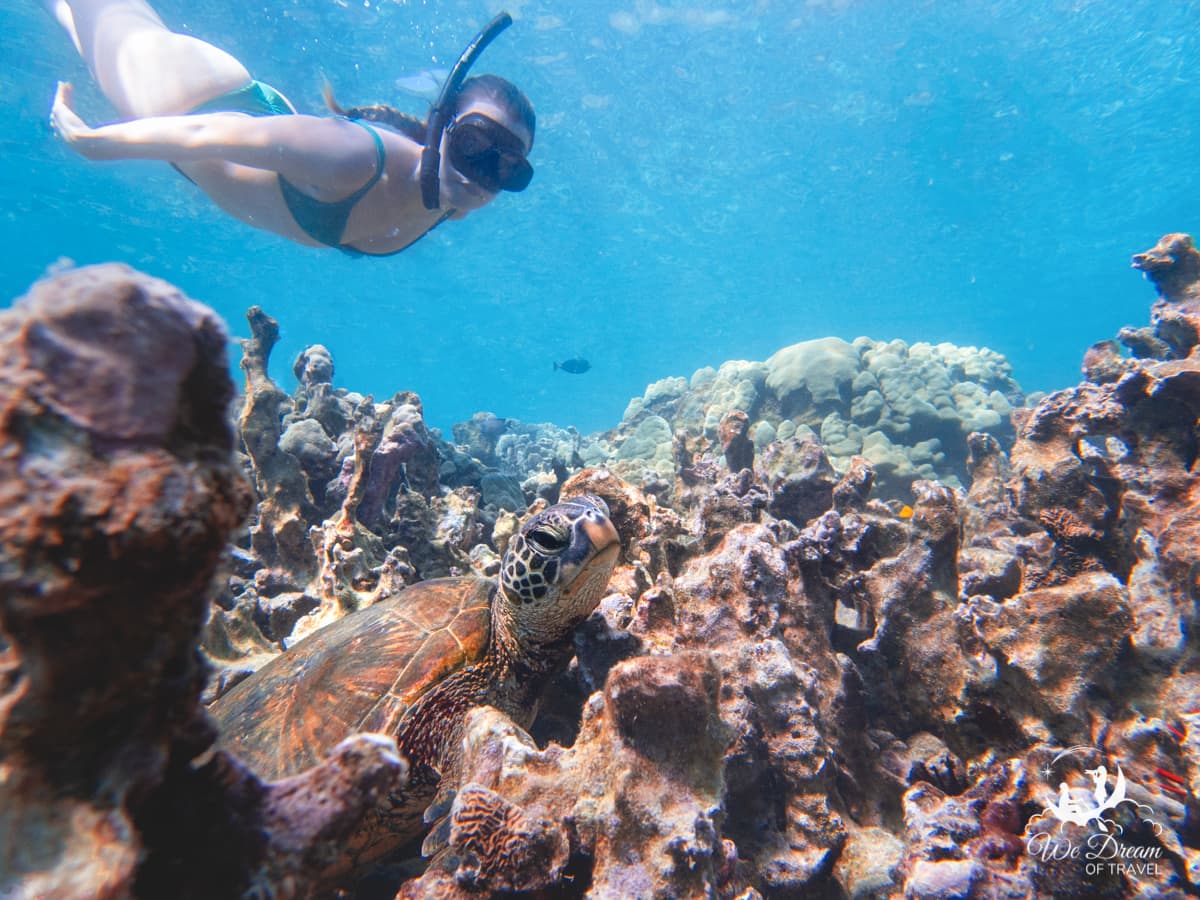
Honolua Bay holds one of Maui's last intact coral reef ecosystems, a crescent of volcanic rock that shelters green sea turtles, spinner dolphins, and over seventy reef fish species from open-ocean currents. The Marine Life Conservation District designation prohibits fishing and anchoring, which means visibility routinely exceeds one hundred feet and territorial fish ignore snorkelers entirely. Children comfortable in chest-deep water can hover above hard coral formations while parrotfish, tangs, and Moorish idols pass within arm's reach. Snorkeling Honolua Bay with children requires reading the ocean. Summer's flat conditions let families wade from the rocky beach into waist-deep channels that deepen gradually toward the outer reef wall. Winter transforms the same entry point into a washing machine of shore break and backwash that sweeps adults off their feet. Trade winds pick up by mid-morning year-round, turning the surface choppy and scattering light—families who miss the 7:00 to 9:00 AM window often abandon the attempt. The bay offers no lifeguards, no rental concessions, and no restrooms; preparation is the entire infrastructure. The descent from the highway follows a dirt trail rutted by rain and foot traffic, manageable for school-age children but taxing with beach gear and toddlers. Families carry everything: reef-safe sunscreen, rash guards for sun protection, snorkel sets sized for smaller faces, and drinking water. The right-hand side of the bay features the shallowest coral heads and the calmest surge patterns; advanced snorkelers swim left toward the point where the reef drops into fifty-foot channels. Children content to float in ten feet of water will see yellow tangs, pencil urchins, and the occasional octopus without venturing past the protected inner cove. Honolua Bay snorkeling with kids delivers encounters most guided tours cannot guarantee, provided families respect the variables that make the bay both accessible and unforgiving. The same remoteness that preserves the reef removes safety nets—cell reception is weak, the nearest facilities are miles south, and changing conditions require quick exits. Families who time their visit and manage expectations leave with footage of their children swimming alongside sea turtles in water so clear the volcanic bottom appears within reach.
“Children comfortable in chest-deep water can hover above hard coral formations while parrotfish, tangs, and Moorish idols pass within arm's reach.”
The best arrival window for snorkeling at Honolua Bay is 07:00–09:00. Arriving during this period helps families avoid afternoon trade winds, choppy water conditions, and limited parking availability.
80°F–88°F; Calmer waters characterize these months. Morning visits provide the clearest visibility for young snorkelers.
70°F–80°F; Higher surf and swell are common. Prioritize early morning visits to catch the calmest conditions before afternoon winds.
—; Fewer visitors ensure easier access to the trail and shoreline. This timing offers a quieter experience for families with children.
Verdict: The concrete best slot for a family visit is between 07:00–09:00 on a weekday during the spring months of April and May.
Honolua Bay is a marine preserve that lacks typical beach amenities, making it better suited for families with children who are strong, independent swimmers. Proper preparation is required due to the rugged terrain and limited infrastructure.
There are no restrooms, showers, or changing facilities at the bay. Plan accordingly for your family's needs before arriving.
The shoreline consists of large, smooth rocks rather than sand, which makes water entry and exiting challenging for younger children. Sturdy water shoes are recommended for everyone.
Natural shade is minimal near the water entry points. Bring portable sun protection and high-quality reef-safe sunscreen to stay protected throughout your visit.
The transition from shallow water to deeper sections occurs quickly. Children must be comfortable swimming in open water without assistance, as there are no lifeguards on duty.
Pack all food and drinks in secure containers to carry out what you bring in. There are no trash receptacles or food vendors on-site.
Honolua Bay is located off Honoapiilani Highway in Lahaina, HI 96761. Access to the shoreline requires a short walk through a wooded trail from the roadside parking area.
Honoapiilani Highway to Honolua Bay access point
Dirt trail from highway to bay
Parking is limited to small pullouts along the highway, so arriving early is essential to secure a space. The trail to the water is unpaved, so ensure you have appropriate footwear for the walk with children.
Honolua Bay is accessible to visitors daily, 24 hours a day. While the site remains open at all times, planning your visit during daylight hours is necessary for snorkeling activities.
Preserving the delicate marine ecosystem while ensuring child safety requires preparation and mindfulness.
Wear reef-safe sunscreen that does not contain oxybenzone or octinoxate to protect the coral health. Ensure kids understand that standing on or touching the reef causes permanent damage to the marine life.
Keep a respectful distance from sea turtles and monk seals to comply with state wildlife protection laws. Advise children to observe fish and invertebrates quietly without chasing or cornering them.
Use a properly fitted life vest for all children regardless of their swimming ability. The water can deepen quickly, and a vest provides buoyancy that helps maintain a horizontal position for better viewing.
Explain the signs of rip currents and keep kids within arms reach at all times. If you notice the water moving toward the open ocean, exit the bay immediately.
Enter the water via the established rocky path slowly to avoid slipping. Assist children in navigating the rounded rocks as they transition from land to the water.
Everything you need to know about honolua bay snorkeling with kids
The bay offers calm, protected waters that are generally suitable for families, though children should always be supervised by an adult. Because this is a Marine Life Conservation District, the coral and marine life remain vibrant, providing an educational experience for young explorers. Safe snorkeling relies on current water conditions, so please check local reports before heading out. Always ensure children are confident swimmers if they plan to enter the water beyond the shallows.
To avoid afternoon trade winds and choppy water, the best arrival window is 07:00–09:00. This early start also helps you secure parking, as the area can become crowded later in the day. Visiting during this period ensures the calmest surface conditions for younger participants.
There is 0 USD entrance fee for this location. Access to the bay is free, allowing families to enjoy this natural landmark without ticket costs. Be aware that no amenities or gear rentals are available on-site, so plan accordingly.
There are no public restrooms, showers, or changing facilities located at the bay. Families should prepare to bring their own supplies and plan for a short walk from the Honoapiilani Highway parking area through the forest trail. Bringing plenty of fresh water and snacks is recommended since there are no vendors nearby.
It is essential to bring your own snorkel gear, reef-safe sunscreen, and plenty of water. Because the entry is rocky, wearing water shoes or fins can help protect feet while navigating the shoreline. Packing a dry bag for personal belongings is also a practical tip for a smooth excursion.
There are no lifeguards on duty at this location. Visitors are responsible for their own safety and must remain aware of changing ocean conditions. Practicing safe swimming habits is critical when exploring these protected waters with your family.
The water is accessed by walking along a wooded trail from the highway, which eventually leads to a rocky beach entry. While the path is relatively flat, it requires a walk through a forested area before reaching the shoreline. Once at the water, the rocky entrance necessitates care when helping children put on their gear.