
English| EUR
Suggested for you
More currencies
Choose a language
Honolua Bay's protected marine reserve draws snorkelers to one of Maui's richest reef ecosystems, but strong currents and rocky terrain demand respect. Success here depends on understanding swell patterns, choosing safe entry points, and recognizing when conditions exceed your skill level.
Quick answer
The most critical honolua bay snorkeling tips focus on timing and entry strategy: arrive between 7:00 and 10:00 AM when water is calmest, enter from the right side of the bay where rocks provide handholds, and stay close to shore if you're inexperienced. Never snorkel alone, always check surf reports before descending the trail, and exit immediately if currents strengthen or visibility drops below fifteen feet.
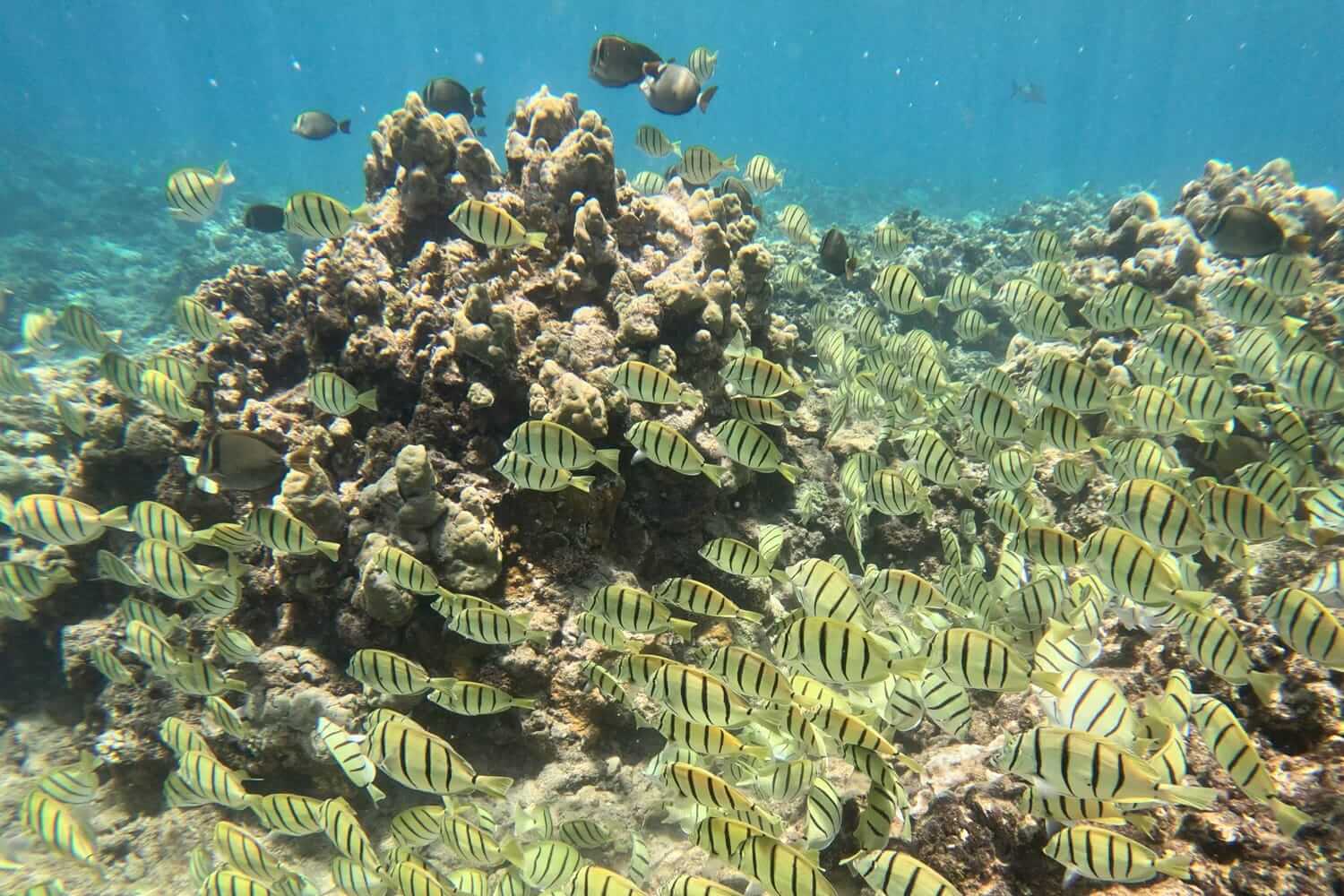
The right side entry point offers the safest access to Honolua's coral gardens, where volcanic rock formations create natural steps into waist-deep water. Most snorkelers misjudge the current strength visible from shore—what appears calm often conceals lateral flows that intensify beyond the protected cove. Honolua bay snorkeling tips begin with reading the water before entering. Look for surface chop, white water near the point, or debris moving laterally across the bay—all indicators that open-ocean swells are wrapping into the cove. The marine reserve prohibits fishing and anchoring, which has allowed green sea turtles and reef fish populations to flourish in densities rare elsewhere on Maui. Parrotfish, triggerfish, and occasional spinner dolphins occupy the shallows near the rocky perimeter, while deeper channels past the fifty-foot mark harbor larger pelagic species best observed from a distance. Reef-safe sunscreen is mandatory—the bay sits within a protected conservation district where chemical filters face strict prohibition. A rash guard provides better coverage and eliminates reapplication concerns during extended sessions. Fins are essential; the bay's size tempts swimmers to cross open water between reef clusters, and without propulsion assistance, fatigue builds rapidly in any current. Most rescues here involve snorkelers who drift past the western point while focused on marine life below. Winter swells from December through March make Honolua a world-class surf break but close the bay to snorkeling for days at a stretch. Even during summer's flat spells, morning sessions vastly outperform afternoon attempts—by noon, wind chop reduces visibility and boat traffic from neighboring bays pushes into the area. The trail down from the highway parking area is steep, uneven, and takes twelve minutes minimum; carry only what you'll use, and remember you'll climb back up in full sun.
“The marine reserve prohibits fishing and anchoring, which has allowed green sea turtles and reef fish populations to flourish in densities rare elsewhere on Maui.”
The best arrival window for Honolua Bay is 07:00–10:00 to ensure calm water, high visibility, and available parking. Visiting during these morning hours avoids the surge of afternoon wind that often reduces water clarity.
—
These times offer the least congestion and optimal conditions for snorkeling.
High of 85°F to 88°F
Water is generally calmest during these months with light trade winds.
High of 78°F to 80°F
Increased north shore swell can lead to restricted water access and lower visibility.
Verdict: For the clearest water and easiest parking, plan your visit for a weekday morning between April and October.
Reaching the snorkeling area at Honolua Bay requires a short forest trail descent followed by entry into one of Maui's premier marine life conservation districts. The full sequence from trailhead to water takes 15–20 minutes.
The trail entrance sits on the makai (ocean) side of Honoapiilani Highway between mile markers 32 and 33. Look for the worn dirt path descending through ironwood trees — there is no formal signage, and visitors often walk past it.
The uneven trail drops roughly 100 feet over a quarter mile through dense vegetation. Wear closed-toe water shoes with grip; the exposed roots and loose rocks become slippery after rain.
The trail exits onto a limestone shelf at the bay's edge. Move carefully over the pockmarked rock — algae accumulates in shaded pockets, and sharp lava formations are common near the water line.
Wade in from the right (north) side of the bay where the bottom slopes gradually and coral heads are sparse. The left side drops quickly and funnels strong currents during high surf.
The entire bay is a Marine Life Conservation District with year-round protections. Keep fins clear of the coral, avoid standing on the bottom, and do not touch or feed any marine life.
Honolua Bay is located along the northwest coast of Maui. The most direct approach is by vehicle via Honoapiilani Highway.
Honoapiilani Highway to Mile Marker 32-33
From highway turnout trail to beach
Parking is limited to narrow pull-offs along Honoapiilani Highway near Mile Marker 32-33, so plan accordingly to secure a spot.
Access to Honolua Bay and the surrounding marine life conservation district is provided at no cost to the public. There are no entrance fees or tickets required to enter the park or access the bay.
Verdict: The entry fee is 0 USD, though visitors may incur costs for equipment rentals or parking if available.
Honolua Bay is accessible to the public throughout the week. Visitors may access the area at any time during the day or night.
Everything you need to know about honolua bay snorkeling tips
For your honolua bay snorkeling tips, remember that the bay is a protected marine life conservation district, so touching or standing on coral is strictly prohibited. We suggest wearing reef-safe sunscreen and moving slowly to observe the diverse fish species in the calm, protected waters.
The entrance fee is 0 USD as there is free entry to the bay and the park. You will not find any ticket booths or charges for accessing the trail or the beach area.
To follow top honolua bay snorkeling tips, you should aim for the best arrival window between 07:00–10:00. Arriving early helps you secure limited parking and enjoy better water visibility before the afternoon winds increase.
The bay is a natural reserve and does not provide public facilities like restrooms or showers. Please plan to bring all necessary supplies with you and carry out everything you bring in to maintain the health of the reef.
The rocky entrance and deep water in certain sections mean it is better suited for experienced swimmers. Families should prioritize safety and keep children in shallower areas where they can comfortably see the aquatic life.
You are welcome to bring your own equipment to enjoy the bay on your own. However, many visitors choose a professional maui snorkel tour to gain local insights and expert guidance on where to find the best coral formations.
As part of your honolua bay snorkeling tips, always stay aware of your surroundings and avoid areas with heavy boat traffic. Always swim with a partner and ensure you are comfortable in open water before venturing out further into the bay.
To properly prepare for this maui landmarks visit, wear water shoes to navigate the rocky entry safely. Check local surf reports for current conditions and ensure you arrive early enough to find parking along Honoapiilani Highway.